
MAS and Bank of Thailand Sign Cybersecurity MoU: What It Means for Regional Fraud Defence
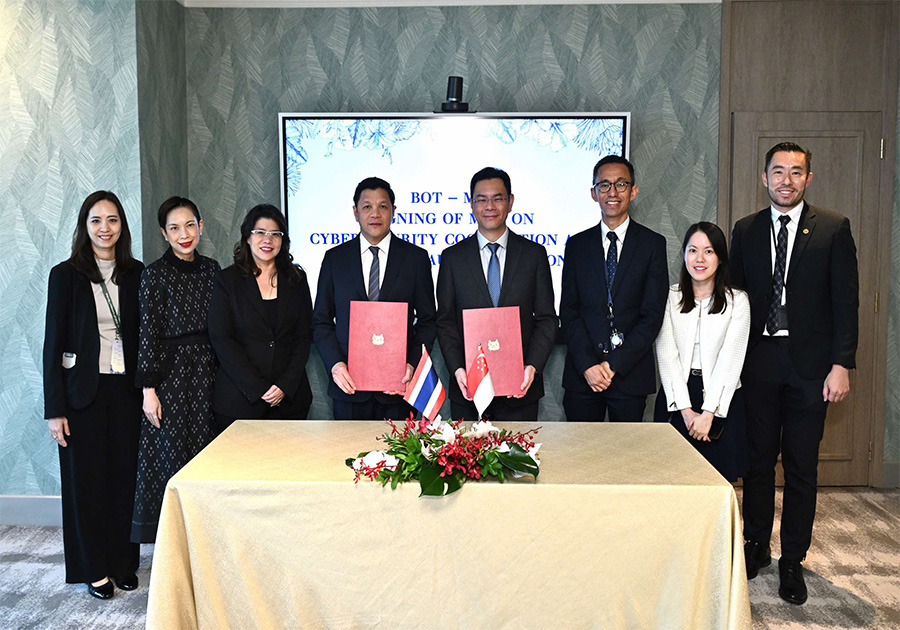
On 24 July 2026, the Monetary Authority of Singapore and the Bank of Thailand signed a Memorandum of Understanding on Cybersecurity Cooperation and Digital Fraud Protection, formalising and expanding ongoing collaboration between the two regulators to strengthen cyber resilience and combat digital fraud across their respective financial sectors.
Two of ASEAN's most digitally active financial markets putting a formal framework around their cooperation is a direct response to the rapidly evolving cyber threat and fraud landscape.
What the MoU Actually Covers
The agreement establishes a framework for cooperation across three areas:
- Information sharing on cybersecurity and digital fraud
- Competency building
- Operational preparedness
The two sides will exchange regulatory and incident updates and threat intelligence affecting the financial sector, conduct joint training, study visits and research exchanges, and carry out cross-border cybersecurity and crisis management exercises.
Each of these three pillars addresses a different layer of the coordination problem. Intelligence sharing closes the information gap that currently lets threat actors move freely between jurisdictions. Competency building acknowledges that the quality of a bilateral agreement is only as strong as the technical capability on both sides of it. And joint crisis management exercises are the difference between a coordination framework that looks good on paper and one that actually functions under pressure.
Why This Matters Beyond the Press Release
Most bilateral regulatory agreements in financial crime remain at the level of policy alignment. This MoU goes further by committing both regulators to operational preparedness, specifically joint exercises that test whether the coordination mechanisms work before a real incident forces the question.
MAS Managing Director Chia Der Jiun noted that cyber risks and digital fraud are key transnational threats confronting the APAC region and called for closer collaboration. This framing treats fraud not as a domestic compliance problem but as a regional infrastructure challenge requiring all hands on deck.
The fraud networks operating across Southeast Asia do not distinguish between Thai and Singaporean financial systems. They route through whichever jurisdiction offers the least resistance at any given moment. A bilateral MoU does not eliminate that, but it narrows the gap.
The Bigger Pattern
This MoU sits within a broader regional trend. Singapore's Shared Responsibility Framework has driven measurable reductions in scam losses domestically. Malaysia's TR PD is pushing payment service providers toward real-time behavioural detection standards. Australia and Canada have established national anti-scam centres with cross-border intelligence mandates. Taiwan's Anti-Fraud Command Centre has blocked billions in spoofed calls and fraudulent messages.
The direction is consistent across every jurisdiction moving aggressively on this: centralise coordination, standardise intelligence sharing, and build operational response capability that crosses borders.
The MAS-BOT MoU is one more node in that emerging network.
On the Front Lines (Level Five's Perspective)
Thailand is not peripheral to the fraud threat landscape in Southeast Asia. It sits directly adjacent to the scam compound networks operating out of Myanmar and Mekong subregion, networks that recruit victims across borders, launder proceeds through multiple financial systems, and iterate on social engineering tactics at a scale that most threat intelligence can barely document.
A bilateral framework between MAS and BOT that includes genuine operational preparedness, not just policy dialogue, is the kind of infrastructure that makes a practical difference to institutions trying to defend against cross-border fraud in real time.
What the MoU establishes in principle, technology and operational coordination must deliver in practice. Shared threat intelligence only produces results when the institutions receiving it have the detection capability to act on it before funds move.
These scam compounds are not just a cyber-fraud crisis, they are a humanitarian one. At least 300,000 people find themselves forced to participate in worldwide online fraud inside compounds primarily in Myanmar, Cambodia and Laos. UNODC estimates industrial-scale scam centres generate close to US$40 billion in annual profits, amounting to almost 40% of the combined formal GDP of Laos, Cambodia and Myanmar
Government sectors, regulators and law enforcement can no longer afford complacency.
Excited to learn more?

the Future of Secure, Compliant, and Connected Enterprises
