
Level Five Named to Bank Rakyat's Fintech Accelerator Top 30 Programme
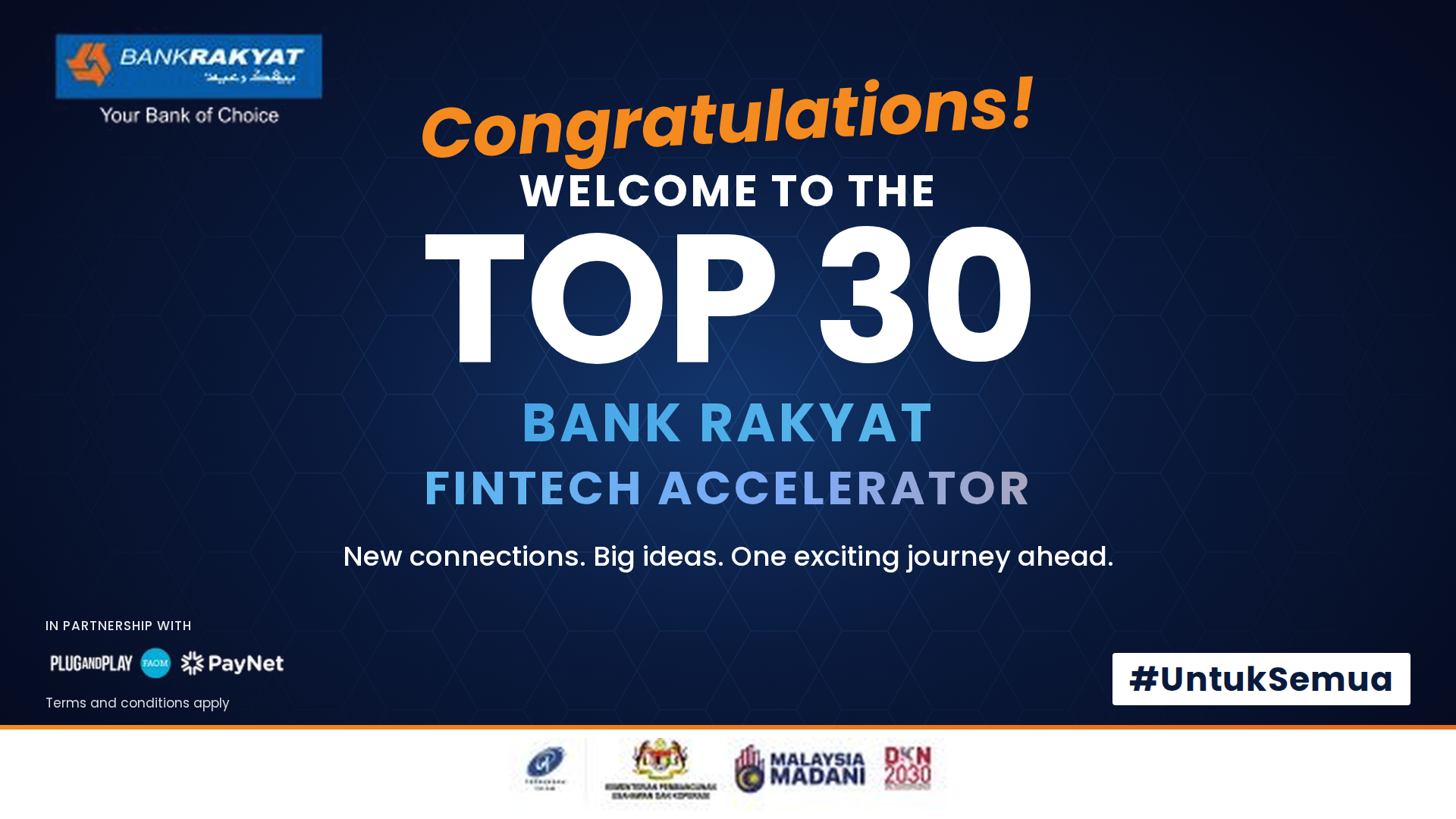
Level Five has been selected among the Top 30 participants in Bank Rakyat's Fintech Accelerator Programme. The orientation session ran this month, and it was the first chance to meet the other participants and get a real sense of what the programme will actually involve over the months ahead.
Why This Programme, and Why Now
Bank Rakyat has spent the past couple of years building out a deliberate fintech strategy, from its own sandbox platform for testing digital financial products to a Fintech Community Hub run jointly with the Fintech Association of Malaysia, Plug and Play, and PayNet. The goal across all of it has been the same: get promising fintech solutions in front of the bank faster, and test them against real problem statements rather than theoretical ones.
Being selected into the Top 30 puts Level Five directly inside that pipeline. The programme isn't a pitch competition that ends after a single demo day. It's structured around working sessions, defined problem statements set by the bank, and a process for refining a solution against actual institutional needs rather than a generic sales pitch.
What the Orientation Signalled
The first session did what orientations are supposed to do: introduce the cohort, outline the shape of what's coming, and set expectations for how the programme will run. Meeting the other 29 participants also gave a useful read on where the rest of the fintech ecosystem is focused this cycle, insurance-tech, regtech, digital lending, and fraud-adjacent tooling all showed up in the room.
For Level Five, the relevant problem statement sits squarely in fraud detection and financial crime intelligence, the same ground the company has been working across Southeast Asia more broadly. The difference here is proximity: working directly with Bank Rakyat's own teams on Bank Rakyat's own problem statement, rather than building in the abstract and hoping it transfers.
What Comes Next
The programme ahead includes structured learning sessions, direct work on the problem statement the bank has set, and regular touchpoints with mentors and other participants in the cohort. None of that guarantees an outcome. What it does guarantee is a tighter feedback loop than most vendor relationships get: faster signal on what's actually useful to a bank running real fraud exposure, and fewer assumptions carried in from outside.
That kind of proximity is exactly where fraud prevention products get better. A platform built in isolation can look strong in a demo and still miss the specific typologies and operational constraints of the institution it's meant to serve. A platform shaped through a structured accelerator, with a real problem statement and real institutional feedback attached, has a much better shot at holding up once it's actually deployed.
What Does This Mean for Your Organisation?
Bank Rakyat's problem statement is not unique to Bank Rakyat. Most financial institutions in the region face the same pattern: scam typologies that rotate faster than internal validation cycles, and detection models that only know their own historical data.
If you run fraud, risk, or compliance at a bank, telco, or government agency, three questions are worth asking now:
- When was your detection logic last tested against typologies you have not seen internally?
- How much of your fraud signal stops at your own institution's boundary?
- Is your current vendor shaped by your operational constraints, or just demoed against them?
What we learn in this programme feeds directly into how we work with institutions across Southeast Asia.
If you want to pressure-test your fraud and financial crime controls against real regional patterns, talk to us.
The Bigger Pattern Worth Noting
Accelerator programmes like this one are also a signal about where Malaysian banks are placing their attention. Bank Rakyat didn't set a generic "innovation" problem statement, it set specific ones, and fraud and financial crime made the cut. That tracks with what's been showing up across the region all year: fraud losses climbing, scam typologies rotating faster than internal validation cycles can keep up with, and institutions increasingly aware that a tool validated only against their own historical data is already behind the syndicates operating across several banks at once.
Working inside a structured programme like this doesn't solve that cross-institutional visibility problem on its own, no single accelerator cohort does. But it does put Level Five's work in front of exactly the kind of institution that needs it tested against real operational constraints rather than a sandbox environment built to flatter the vendor.
Looking Ahead
Level Five is treating this as exactly what it is: an opportunity to learn, build alongside people who know the problem from the inside, and contribute something useful back to Malaysia's fintech ecosystem in the process. The connections made in the first session, across both the bank's team and the other 29 participants, are already part of that.
More updates will follow as the programme progresses. For now, the focus is on making the most of the sessions ahead and building toward the problem statement that got Level Five into the room in the first place.
Excited to learn more?

the Future of Secure, Compliant, and Connected Enterprises
