
Agentic AI and Excelling in the Islamic Fintech Spaces: What We Learned From Asia Fintech Forum
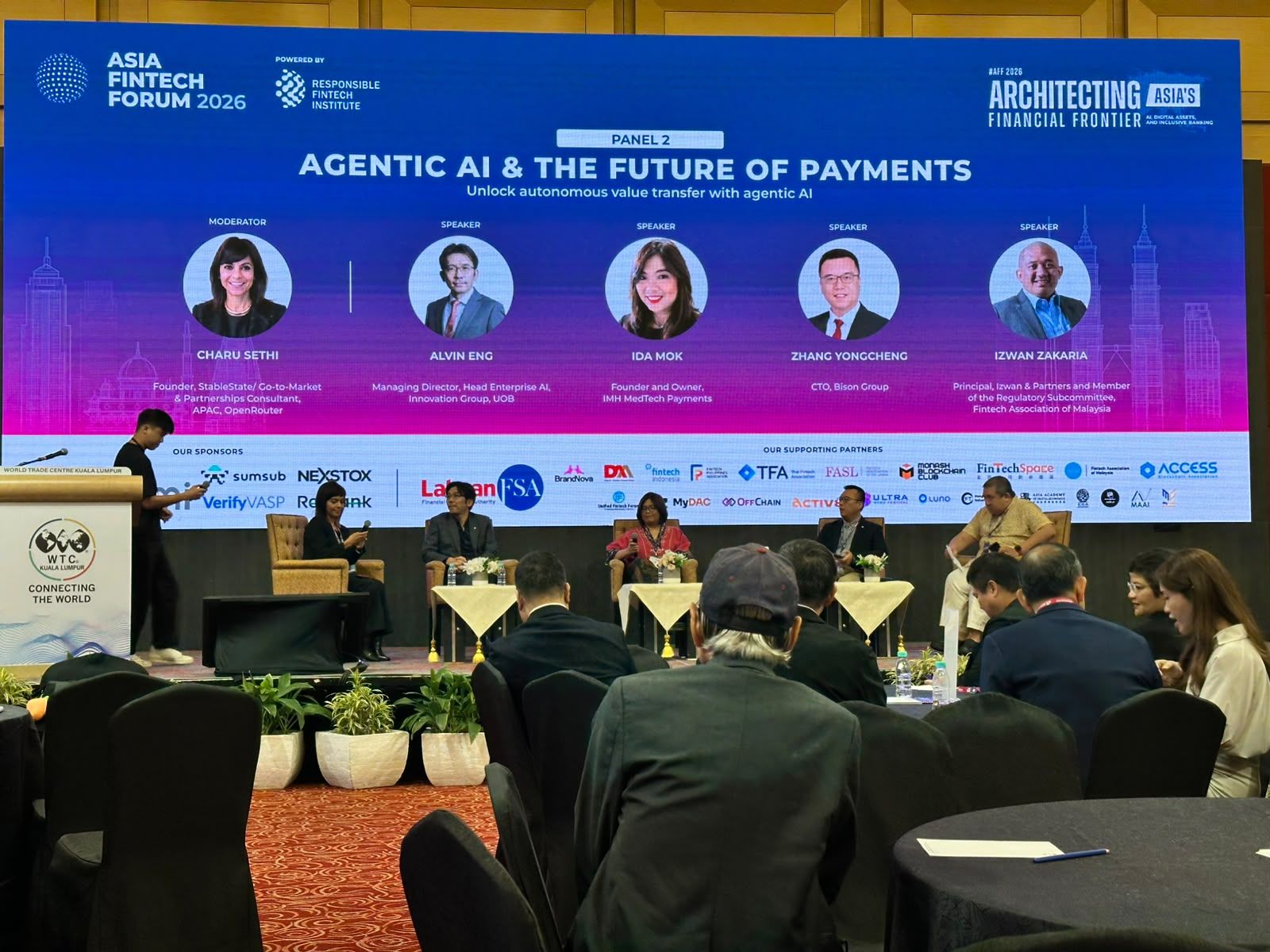
Level Five attended the Asian Fintech Forum in October 2026. The main discussion put a fine point on where AI in financial services is actually headed.
Agentic AI: systems that no longer just surface information for a human to act on, but take the action themselves, authorising a payment, rebalancing a position, flagging and resolving a case, without a person approving each individual step.
That shift changes who is actually accountable when something goes wrong, and whether the people responsible for catching it are equipped to.
Responsibility Doesn't Delegate as Cleanly as Decisions Do
A human approver carries accountability by default. A licence, a job title, a signature on the file, all of it ties a decision back to a person who can be asked to explain it. An agent executing that same decision doesn't carry any of that. It can log what it did. It can't be held to account for it the way a person can.
Delegating a task to an autonomous system doesn't delegate the responsibility for that task. It just moves the responsibility somewhere less visible, usually back to whoever configured the agent's parameters, and often to a compliance team that never anticipated the specific decision the agent would eventually make on its own.
That's the part most fintech conversations skip past. The technology working isn't the hard part. It’s whether compliance teams can act effectively.

Malaysia's Pitch to Become the Islamic Finance Equivalent of Silicon Valley
The second thread from the conference was more optimistic: Malaysia positioning itself as a serious hub for AI, fintech, and Islamic finance together, not as three separate ambitions but as one.
Malaysia already has infrastructure most markets building AI-native Islamic finance from scratch don't: established Shariah governance frameworks, a central bank with decades of experience overseeing Islamic banking alongside conventional banking, and a fintech sandbox culture that's already proven it can bring new financial technology to market under supervision. Layering agentic AI on top of that foundation is a genuinely different starting position.
But infrastructure isn't the same as readiness. A hub status gets earned by institutions that can actually govern what they deploy, not by proximity to good regulation alone. And governance capacity is exactly where the gap tends to show up first.
What Does This Mean for Your Organization?
Most Islamic financial institutions evaluating AI tools can point to a Shariah compliance sign-off somewhere in the onboarding process for new products. Fewer can show that the compliance staff reviewing an AI agent's decision logic have the hands-on fluency to actually interrogate it, rather than approve it on the strength of the vendor's documentation. Contact us here to talk through what that fluency gap looks like inside your institution.
When AI Acts on Someone's Behalf, Accountability Can't Be an Afterthought
Trust in an autonomous system starts with a basic question: when an AI agent acts on a customer's behalf, who authorised it, and can the institution prove that after the fact?
Agentic AI is already approving transfers and resolving disputes without a human signature. Each action needs three things verifiable on demand: the scope of authority the agent was given, a record of what it actually did, and a named party who owns the outcome if it acted outside that scope.
Most institutions can describe this in policy. Fewer can produce the evidence trail a regulator would actually ask for, the specific authorisation behind a specific transaction, not a general statement that the system "follows approved parameters." That gap between a documented policy and a demonstrable one is where accountability breaks down.
Clear accountability isn't a constraint on deploying agentic AI faster. It's the precondition for deploying it without creating a liability nobody can trace back to a decision point.
Cross-Border Progress Doesn't Happen Inside One Institution's Walls
Connected payments, shared digital identity, and cross-border data flows sound like infrastructure projects. They're cooperation problems wearing infrastructure language.
A payment rail moving money across three countries is only as trustworthy as the weakest identity standard among the institutions it touches. None of this gets solved by any single bank, regulator, or technology provider working alone.
That's the same structural gap that shows up in fraud typologies moving across institutions. A regional payment or identity framework works only to the extent that regulators set compatible standards and institutions implement them consistently, rather than each to its own interpretation.
Where alignment exists, benefits compound: faster settlement, fewer manual checks, less friction for legitimate customers. Where it doesn't, fragmented standards create the exact blind spots a coordinated standard would close. Cooperation isn't a nice-to-have alongside the technical build. It is the technical build, conducted between institutions instead of inside one.

Level Five's Perspective
Integrating AI technology around Shariah can be a hurdle, especially if compliance professionals are too wary or too inexperienced to tackle the growing threats of AI fraud.
Both failure modes come from the same root cause. A team that's too wary treats every AI-driven decision as a liability to be slowed down or avoided, which doesn't stop fraud, it just stops the institution from building the detection capability it needs to keep pace with syndicates that have no such hesitation. A team that's too inexperienced moves the opposite direction, approving systems it can't properly interrogate, because it doesn't yet know what questions to ask of a model it didn't build and doesn't fully understand.
Neither gap is really about technology. It's about compliance professionals being asked to govern a category of risk the profession hasn't had time to build fluency in yet. Traditional fraud training assumes a human actor making decisions a reviewer can trace, step by step, back to intent. Agentic AI breaks that assumption, and Shariah-governed institutions feel it especially sharply, because Shariah compliance adds a layer of judgment on top of AI governance that a generic fraud framework was never built to carry.
Malaysia's ambition to become a genuine hub for AI-driven Islamic finance will be decided less by how much capital or how many fintechs it attracts, and more by whether the compliance teams inside these institutions close that fluency gap before the rest of the industry catches up to the same question.
Excited to learn more?

the Future of Secure, Compliant, and Connected Enterprises
